November – January 2026
Connection at the Core of Holistic Learning
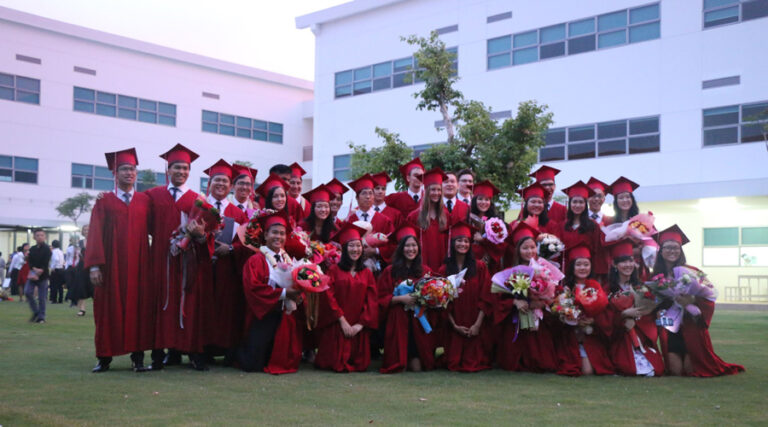
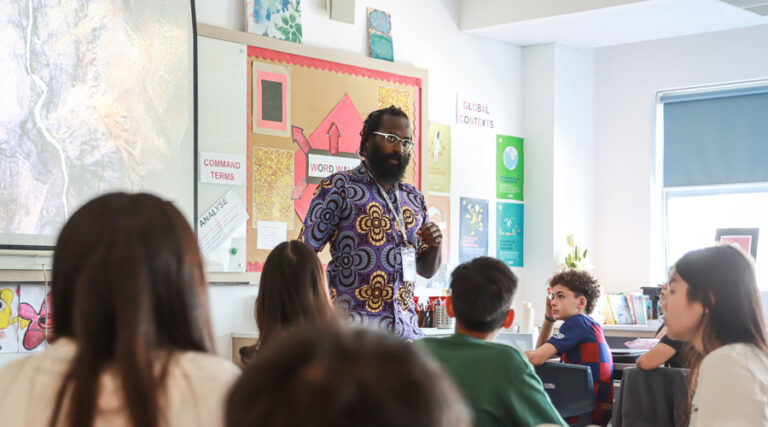
At ISPP, holistic learning is a learner-centred approach that recognises the importance of the interconnections between domains of learning, and between individuals and their peers, their communities and the world around them. Holistic approaches enhance development across intellectual, emotional, social, physical and creative potentials. We value an approach to educating the whole child that focuses on the development of individual potential, collective efficacy and connection in community.
Our school values of curiosity, courage, care and community link deeply to the process of learning together and growing together as expressed in our school Vision. These values are expressed and experienced outwardly and collectively, as well as developed as fundamental internal principles.
In an increasingly digitised and virtual world, we place value on the power of human connection to support wellbeing, long-term mental health, more engagement at school and more purpose and relevance in our learning. This is observed directly in our community and is well supported by a large body of academic research:
- Students who feel connected are less likely to engage in risky behaviours and more likely to have higher grades and better attendance. [Centres for Disease Control]
- Higher school connectedness is strongly associated with a lower prevalence of poor mental health among high school students. “When youth feel connected to their school, they are less likely to experience poor mental health, sexual health risks, substance use and violence. And they are more likely to engage in positive health behaviours (physical activity and healthy eating), have higher grades and test scores, have better school attendance, and graduate high school.” [Wilkins et al.]
- Extracurricular activities promote the formation of new friendships and help maintain existing ones, which is essential for social development and a sense of belonging. [Schaefer et al.]
- Organised activities have a positive impact on mental health outcomes from participation in team sport, school clubs and non-sport extracurricular activities. [Bolens et al.]
This issue of the Pulse features many of the activities where students are finding connectedness, engaging in our community and exemplifying our school values.
Activities like the Elementary Student Council Epic Arts trip, Secondary Student Union and the Environmental Action Committee are intentionally structured to build student voice, courage, leadership, resilience and community.
Activities like Inktober, the production of Romeo & Juliet and the Elementary InChoir develop curiosity and creativity and challenge students to push boundaries.
Rocking Youth Cambodia, Designing for Blind Children and Cats on Campus connect ISPP students to a wider community and demonstrate care in action.
The Phnom Penh Plunge, PPAC8 swimming and all of our sports teams provide the opportunity for students to build friendships, develop skills, maintain physical fitness and a healthy lifestyle and to foster our international school’s community. They are also great ways to reduce stress and have fun!
I hope you enjoy seeing holistic learning in action in these pages and take the opportunity to discuss with your child the opportunities they are taking to develop the values of Curiosity, Care, Courage and Community.
Works Cited:
Boelens, Mirte, Michel S. Smit, Hein Raat, Wichor M. Bramer, Wilma Jansen. (2022). Impact of organized activities on mental health in children and adolescents: An umbrella review. Preventive Medicine Reports, 25. https://doi.org/10.1016/j.pmedr.2021.101687
Centres for Disease Control and Prevention. (2009). School Connectedness: Strategies for Increasing Protective Factors Among Youth. Atlanta, GA: U.S. Department of Health and Human Services
Schaefer, D. R., Simpkins, S. D., Vest, A. E., & Price, C. D. (2011). The contribution of extracurricular activities to adolescent friendships: New insights through social network analysis. Developmental Psychology, 47(4), 1141–1152. https://doi.org/10.1037/a0024091
Wilkins N.J., Krause K.H., Verlenden J.V., Szucs L.E., Ussery E.N., Allen C.T., Stinson J., Michael S.L., Ethier K.A. (2021). School Connectedness and Risk Behaviors and Experiences Among High School Students – Youth Risk Behavior Survey, United States.
Eileen Niedermann
Director