Strategic Goals 2025+
In 2025, the ISPP Board’s Strategic Planning Taskforce, together with members of faculty, leadership and parents, framed a new strategic direction for ISPP. Using the three elements from our recently developed Mission statement, new strategic goals were identified in three key priority areas: Curriculum & Programmes; Wellbeing, Care and Belonging; and Facilities.
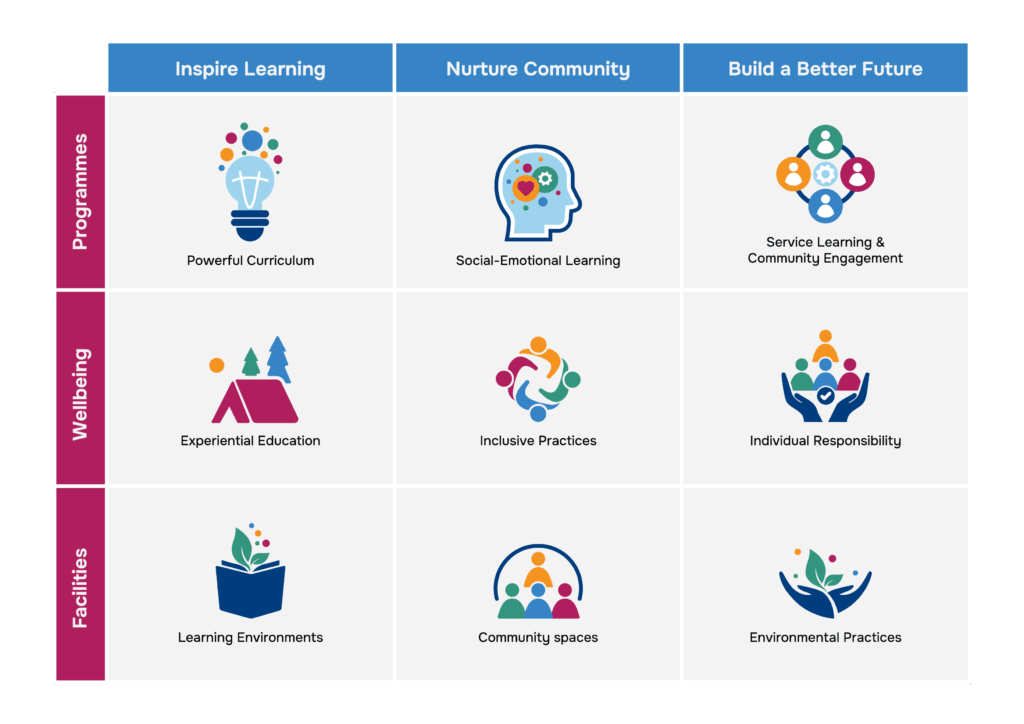
Our purpose is driven by these three areas of focus and further broken down into the following strategic priorities:
Inspire learning by providing opportunities that are purposeful, joyful and compelling.
Strategic Priority 1: Co-create a curriculum with students that is inquiry-driven, authentic, and engages learners in productive challenge.
Strategic Priority 2: Extend experiential learning that sparks curiosity, fosters skill-development and resilience, and champions social responsibility.
Strategic Priority 3: Transform our physical learning environments to be contemporary, flexible, and inspiring.
Nurture community, belonging and inclusion so that everyone is valued, connected and safe in an environment that welcomes and supports diversity.
Strategic Priority 1: Formally identify, implement and embed social-emotional learning as a key element in the educational programme, cultivating empathy, resilience, self-awareness and mutual respect.
Strategic Priority 2: Deepen inclusive practices school-wide, embracing a diverse community where each member feels a strong sense of belonging and can develop and express their unique identity.
Strategic Priority 3: Design and optimise our campus spaces to foster meaningful connections across our community groups, building unity and shared purpose in a safe environment.
Build a better future through learning, which asks students to tackle the complex challenges of the world, giving them skills, values and inspiration to address these challenges.
Strategic Priority 1: Redesign our approach to service learning and community engagement, equipping students with a deep understanding of local and global issues and the skills and motivation to make a positive impact.
Strategic Priority 2: Expand opportunities for students to assume individual responsibility, make choices, self-direct and have accountability for their actions, developing their identity as global citizens capable of making a positive impact.
Strategic Priority 3: Reduce ISPP’s ecological footprint by evaluating resource consumption, modelling responsible environmental practices, and demonstrating how ISPP can be a steward of a sustainable future.
About ISPP
Learn More
Click on a topic below to learn more our school.
Footer
Join Us
Make an inquiry or schedule a tour to find out more about our beautiful campus and unique education programmes.